
By the SHERQ Team at SPM
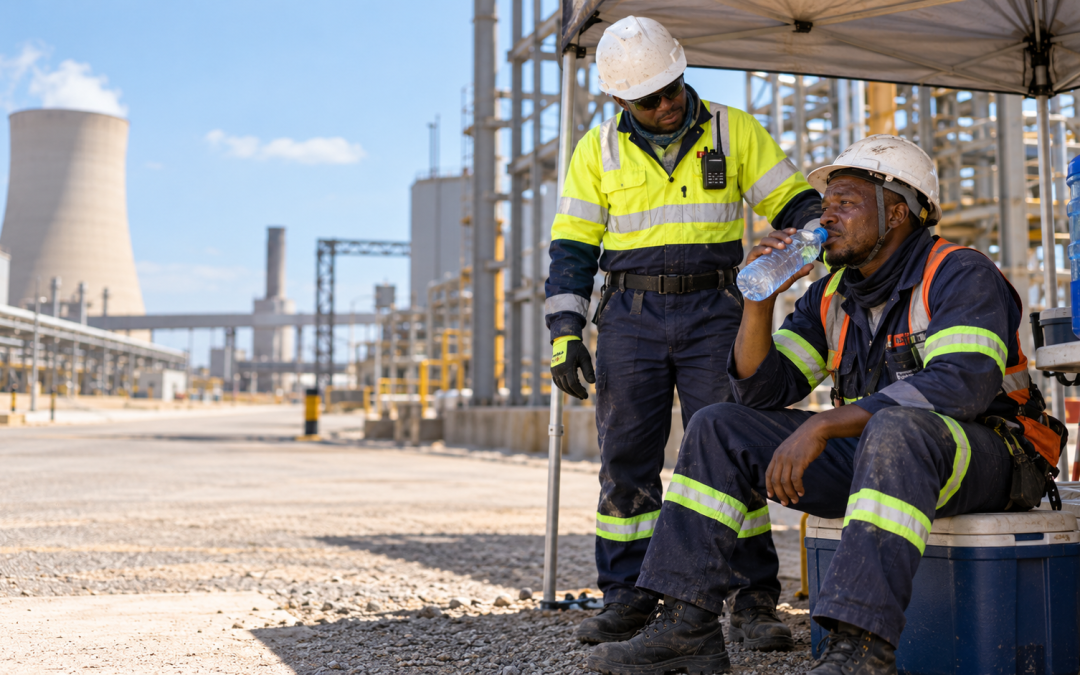
Heat can affect people doing physical work outdoors, especially in direct sun, humid conditions or when protective clothing limits airflow. The demands of the task also matter: strenuous work adds to the body’s heat load.
A worker who feels unwell in hot conditions should stop work and tell a supervisor. Take the report seriously, even if the symptoms seem mild. Heat-related illness can worsen if the person remains in the heat.
- Unusual thirst, dry lips or reduced urine
Thirst, dry lips and reduced or dark urine can be signs of dehydration. The worker may also seem slower or less able to concentrate.
Make cool drinking water available and remind workers to drink regularly during the shift. If someone is unwell, move them out of the heat and follow the site’s first-aid procedure.
- Heavy sweating or a rapid, pounding pulse
Sweating is the body’s way of cooling itself. Heavy sweating during strenuous work, especially alongside a rapid or pounding pulse, can signal that the worker is under strain.
Stop the task, move the person to a cooler place and have someone stay with them while a first aider assesses them. Do not send them straight back to strenuous work.
- Headache, dizziness or visual disturbance
Headache, dizziness or blurred vision can make it unsafe to work around equipment, vehicles or other site hazards. These symptoms can also be associated with serious heat illness.
Stop the work and get the person to a cool area. A supervisor or trained first aider should assess them. They should not return to safety-critical work while symptoms continue.
- Painful muscle cramps
Heat cramps can affect the arms, legs or abdomen, particularly after demanding physical work and heavy sweating.
The worker should stop and rest in a cool place. Follow the site’s first-aid guidance on fluids. Get medical advice if the cramps are severe or do not settle.
- An itchy red rash
Heat rash may appear as small, raised red spots on areas such as the face, neck, back, chest or thighs.
Move the worker to a cooler, less humid place and keep the affected skin dry. If the rash persists or worsens, seek medical advice.
- Weakness, unusual tiredness, nausea or vomiting
Unusual weakness or fatigue, nausea and vomiting can be signs of heat exhaustion. Vomiting or being too unwell to drink needs prompt medical attention.
Stop the person’s work, move them out of the heat and get a first aider to assess them. Follow the site’s procedure for arranging medical care.
- Clumsiness, irritability or confusion
A worker who becomes clumsy, reacts slowly, seems unusually irritable or struggles to make decisions may be seriously affected by heat. These changes can be mistaken for ordinary tiredness.
Stop the person from operating equipment or driving. Get urgent medical help if they are confused or disoriented, and do not leave them alone.
- Fainting, collapse, seizures or loss of consciousness
These are emergency signs. Call emergency medical services immediately and follow the site’s emergency procedure. Move the person to a cool place and begin cooling them while help is on the way, following instructions from the emergency operator and trained first aiders. Do not give anything by mouth to someone who is not fully conscious.
Plan for heat before the shift
The supervisor should consider the conditions workers will face: direct sun, humidity, airflow, the physical effort required and the clothing or PPE needed for the task. Work and rest periods, access to shade and cool drinking water, supervision and time to acclimatise should be addressed in the site’s risk assessment and work arrangements. Do not remove required PPE if doing so would create another hazard; manage any heat risk from clothing or equipment safely.
Workers should report symptoms in themselves or a colleague as soon as they notice a change. A person showing signs of serious heat illness needs urgent help.