
By the SHERQ Team at SPM
An incident investigation can look complete long before it has done its job. The form is filled in, statements are attached, and actions are allocated, so the report moves toward sign-off. However, if the evidence is incomplete, the causes have been simplified, or the actions cannot be tracked, the same conditions may still be present. Closing the report should mean the organisation understands what happened and has a workable plan to reduce the likelihood of recurrence. These nine questions can help determine whether that point has been reached.
- Do we know exactly what happened?
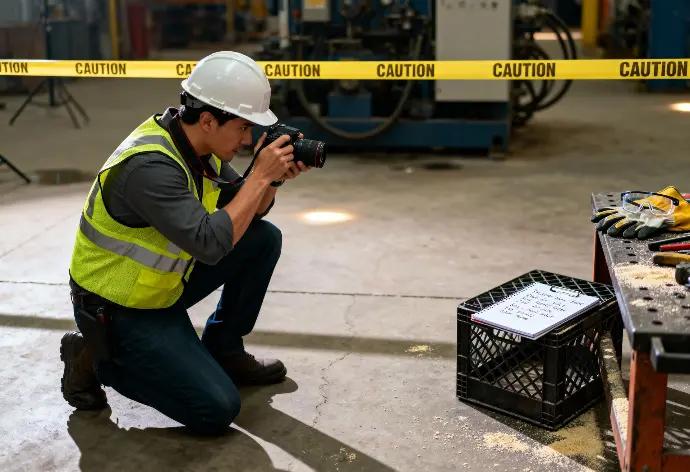
A reliable report needs a clear sequence of events. It should explain what work was being performed, the conditions at the time and the people, equipment or materials involved. Photographs, witness accounts, permits, inspection records and other available information should support the sequence. Separate facts from assumptions, and record gaps or conflicting information rather than quietly filling them in.
- Have we found the causes behind the incident?
Labels such as “human error” or “failure to follow procedure” rarely explain enough. The person’s final action may have been influenced by poor planning, unclear instructions, inadequate supervision, workload, equipment design or changing site conditions. Looking beyond the immediate cause helps the organisation identify the weaknesses that allowed the situation to develop. Without that work, the response may focus on the individual while leaving the underlying problem untouched.
- Were the right people consulted?
People who were present or directly involved may know things that cannot be found in a permit, procedure or photograph. Gather their accounts promptly, while the details are still fresh, and without intimidation or premature blame. Where versions differ, the investigator should test them against physical evidence and available records. The report should also explain how any unresolved differences were handled.
- Do we know why the controls failed?
A risk assessment may list the required controls without showing whether they worked in practice. The investigation needs to establish whether procedures, permits, protective equipment, barriers, training and supervision were available, suitable and understood. It should also consider whether conditions changed after the work was planned. A control cannot be treated as effective merely because it appeared in the paperwork.
- Have all reporting requirements been met?
Internal reporting is only one part of the process. The incident may also need to be reported through the client’s channels or to an external authority, depending on what happened and where the work took place. SHERQ should confirm which requirements apply and keep the relevant dates, reference numbers and proof of notification with the investigation record. Missing a reporting deadline can create a compliance failure on top of the original incident.
- Do the proposed actions address the findings?
The actions must connect directly to the causes identified in the report. Toolbox talks, reminders and retraining may be appropriate, but they should not become automatic responses to every incident. Some findings may require changes to equipment, procedures, planning, staffing or supervision. If an action cannot be linked to a specific finding, ask what problem it is intended to solve.
- Does every action have an owner and deadline?
A long list of actions creates little value if nobody is clearly responsible for completing them. Each action needs an accountable owner, a realistic completion date and an agreed form of evidence. The investigation may be finalised while some actions remain open, but they must move into a controlled tracking process. Outstanding work should remain visible until it has been completed and checked.
- How will we know whether the changes worked?
Completing an action does not prove that the risk has been reduced. The organisation should decide how to test effectiveness and allow enough time for the new control to be used under normal working conditions. Follow-up inspections, observations, audits or employee feedback may be needed. If the same weakness remains or the change introduces another problem, further action should follow.
- Could the same problem exist elsewhere?
The weakness that caused one incident may also be present at another site, on similar equipment or during a related task. Review relevant procedures, risk assessments, training material, and inspection criteria across the business. Lessons should reach everyone who could encounter the same conditions, including contractors where applicable. An investigation loses much of its value if the learning remains with only the team involved.
The report can be finalised before every action has been completed, but the incident-management process continues after sign-off. Outstanding actions still need to be tracked, verified and tested to determine whether they have worked. An investigation has served its purpose when its findings lead to practical changes, and those changes reduce the chance of the same incident happening again.