
By the Operations Team at SPM
South African safety requirements place clear responsibility on employers and users of machinery to provide safe equipment and systems of work, identify hazards and take appropriate precautions before energising machinery. Isolation must provide positive protection against unintended operation because switching equipment off does not, on its own, make it safe. The work must also follow the client’s approved switching procedure, permit-to-work system, lock-out procedure and applicable technical standards. The precise requirements will depend on the equipment, voltage, work performed and site. The following controls provide a practical framework for confirming readiness before energising electrical equipment.
- Confirm that the work scope is complete
The completed work must be checked against the approved work order, job card, method statement and permit requirements. Every task included in the scope should either be complete or formally recorded as outstanding, together with the effect that it may have on energisation. Verbal confirmation from one person is not enough when several employees or contractors have worked on the equipment. The responsible person must be satisfied that the equipment can be handed back without unfinished work creating an additional risk.
- Confirm that the correct documents are available
The authorised person should have access to the latest approved single-line diagrams, schematics, protection information, switching instructions and equipment records relevant to the work. Document numbers and revision details should be checked because an outdated drawing can present a system differently from the way it is configured on site. Any changes made during the work must be recorded and communicated before the equipment is energised. Where electrical installation work has been performed, the required inspection, testing and certification records must also be available where applicable.
- Inspect the equipment and the surrounding area
A physical inspection should confirm that covers, guards, barriers, enclosures, terminations, earthing connections and labels are in the correct condition. The surrounding area should also be checked for water, damaged flooring, poor access, combustible material or any other condition that could increase the risk during energisation. Equipment should not be returned to service because the work looks finished from a distance. Any defect that could affect safe operation must be corrected or assessed by an appropriately competent person before energisation proceeds.
- Review test results and protection settings
The required tests will depend on the equipment, voltage level, work performed and approved technical procedure. The responsible competent persons should review the results and confirm that they meet the approved requirements before the equipment is released for service. Protection settings, interlocks, trip functions and related control arrangements must correspond with the approved design and operating requirements. A missing, incomplete or unexplained result should be resolved before the switching process begins.
- Account for everyone who worked on the equipment
Every employee and contractor who worked on or near the equipment must be accounted for before it is energised. The permit holder, responsible supervisor and authorised person should confirm that the work party has withdrawn and that nobody remains inside an enclosure, behind a barrier or in another part of the system. This becomes especially important when several contractors, disciplines or shifts have been involved. The status of every related permit must be clear, and no permit should be treated as closed simply because the main work team has left the area.
- Remove tools, test equipment and temporary materials
Tools, test leads, temporary jumpers, cleaning materials and unused components must be removed from the equipment and the immediate work area. A deliberate inspection is necessary because small items can remain inside panels, cable compartments or transformer areas after work has been completed. These items can interfere with moving parts, create an unintended electrical path or cause damage when the equipment is energised. Good housekeeping at this stage is part of the safety check, not the final cosmetic task.
- Control the removal of locks, tags and temporary earths
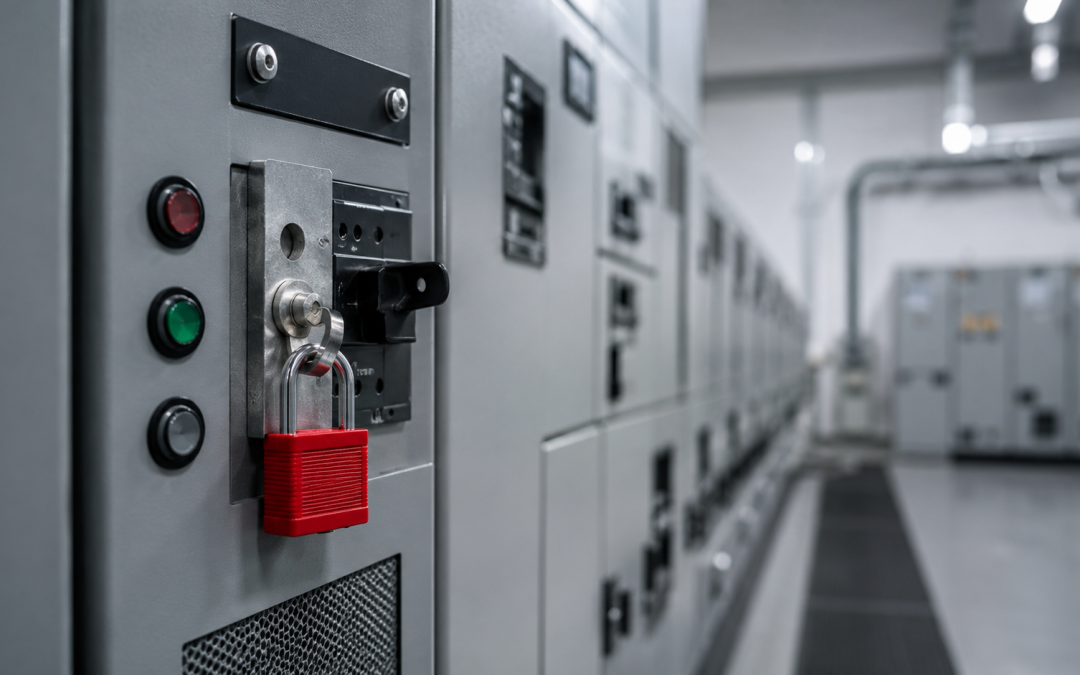
Locks, tags, safety devices and temporary earths may only be removed by authorised persons in accordance with the approved permit-to-work, lock-out and switching procedures. The sequence must be controlled because removing one protective measure can change the condition of the system and expose people to a different hazard. No lock or tag should be removed merely because its owner cannot be found or because the equipment is needed urgently. Any exceptional removal must follow the client’s formally approved procedure and authorisation requirements.
- Confirm that protection and auxiliary systems are ready
Electrical equipment may depend on protection relays, trip circuits, control supplies, cooling systems, alarms, interlocks and communication systems to operate safely. These supporting systems must be available and in the correct operating condition before the main equipment is energised. Any protection or interlock disabled for testing must be restored, checked and recorded. The control room and operating team should also be able to see the correct equipment status and respond if the equipment does not behave as expected.
- Clear the area and notify affected people
The energisation area must be controlled so that only authorised people remain within the relevant boundaries. The control room, operators, nearby work teams and other affected departments should be told what will be energised, when it will happen and what operational changes may follow. Warning notices and barriers must reflect the new status of the equipment. Nobody should enter the area believing that the equipment is still isolated because the change was communicated to only part of the site.
- Energise under controlled conditions and monitor the result
The authorised person must follow the approved switching sequence and maintain the required communication with the control room and other responsible personnel. People must remain in the designated safe positions and use the protective equipment identified through the risk assessment and site procedure. Once the equipment is energised, the team should monitor indications, alarms, voltage, current and any abnormal noise, smell, vibration or temperature. If the equipment does not respond as expected, the process must be stopped, and the system made safe before any investigation begins.
Energisation is the point at which completed work becomes operational risk. A disciplined handover allows the organisation to confirm that the equipment, documentation, protection systems and people are ready for that change. Taking the time to complete these controls protects employees and contractors while reducing the likelihood of equipment damage, unplanned outages and repeat work.
Sources: Occupational Health and Safety Act 85 of 1993; General Machinery Regulations, 1988; Electrical Machinery Regulations, 2011; Electrical Installation Regulations, 2009; and Mine Health and Safety Act 29 of 1996, where applicable.